Archives for posts with tag: proteomics

The surrounding environment is vital for all living things. This is no different for cells, whose environment is known as the extracellular matrix. Just as a worm burrows through soil, as a gazelle leaps across a plain, or as I become diverted by the alluring smell of Italian cooking, cells interact physically and chemically with their surroundings. These interactions, via cell surface receptors, control what cells do next, how they grow and divide, and how healthy they remain.
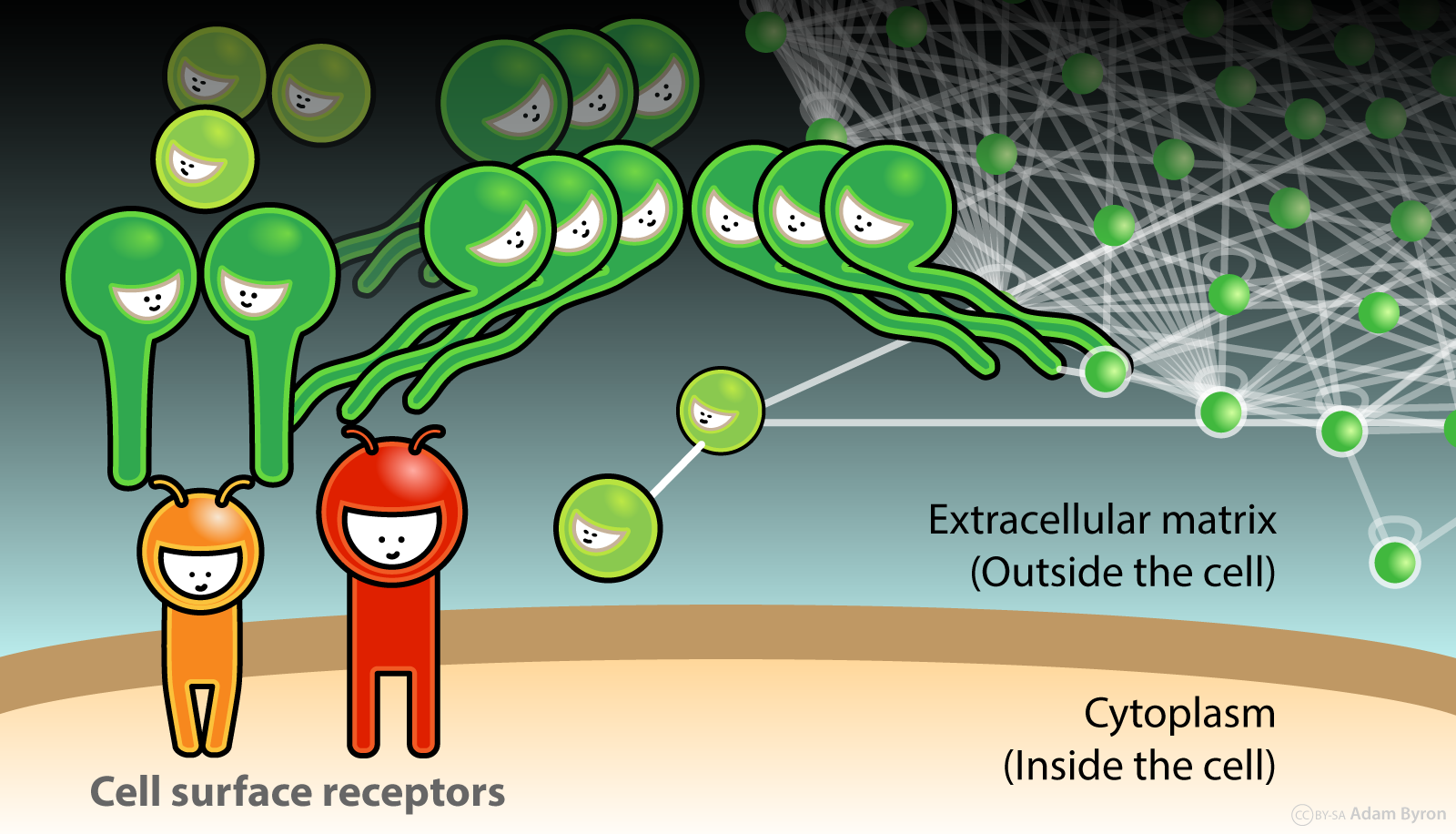
Extracellular matrix networks // Image by Adam Byron

Read the rest of this entry »

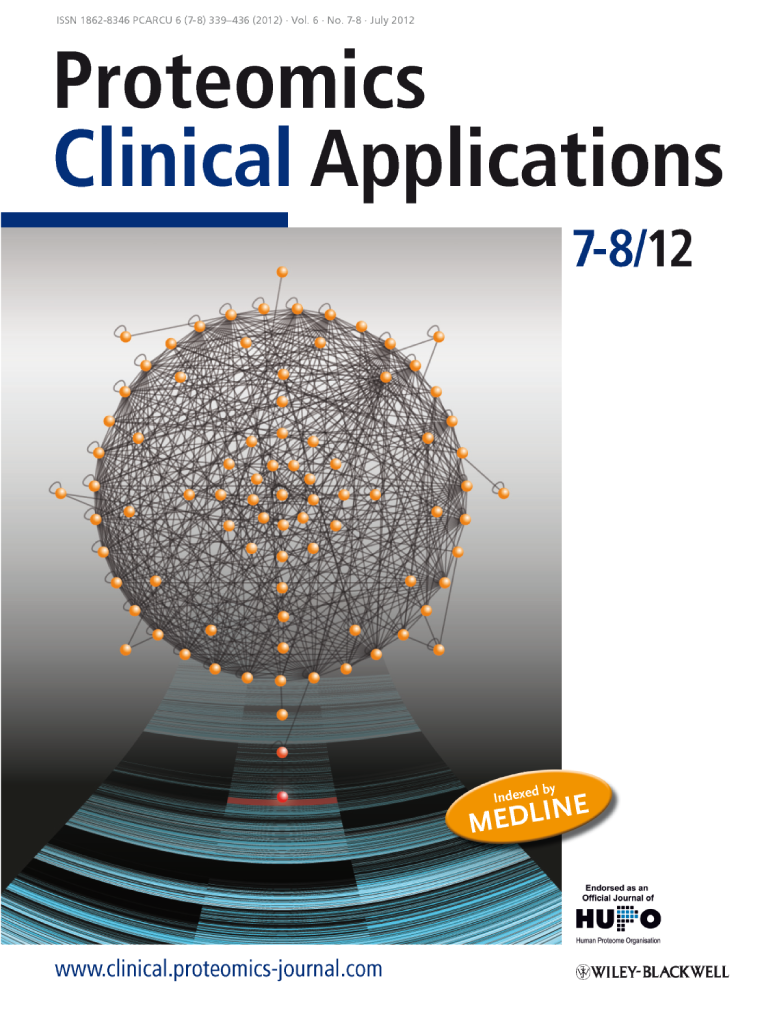
Proteomics Clinical Applications cover, 2012, vol. 6 (no. 7-8) // Image by Adam Byron // Reproduced with permission from Wiley-VCH Verlag GmbH & Co. KGaA

Proteomics Clinical Applications cover, 2012, vol. 6 (no. 7-8)

My image features on the cover of the current issue of the journal Proteomics Clinical Applications.

Read the rest of this entry »

The liver plays key roles in fighting infection, extracting energy from food, ridding the body of waste and other important functions. Although a healthy liver successfully performs these numerous jobs every day, it can be harmed when exposed to additional, repeated insults, such as alcohol misuse. Long-term, continuous damage to the liver leads to scarring of the tissue (fibrosis) and ultimately liver failure. In fact, liver disease is the fifth most common cause of death in the UK.

Fibrotic extracellular matrix // Image by Adam Byron

Read the rest of this entry »

My paper has been published in the current issue of the journal Proteomics. The paper also makes the cover of the issue, which is a special issue on the theme of Cancer Proteomics.

Proteomics cover, 2012, vol. 12 (no. 13) // Images by Adam Byron & Sue Craig // Reproduced with permission from Wiley-VCH Verlag GmbH & Co. KGaA

Proteomics cover, 2012, vol. 12 (no. 13)

Read the rest of this entry »

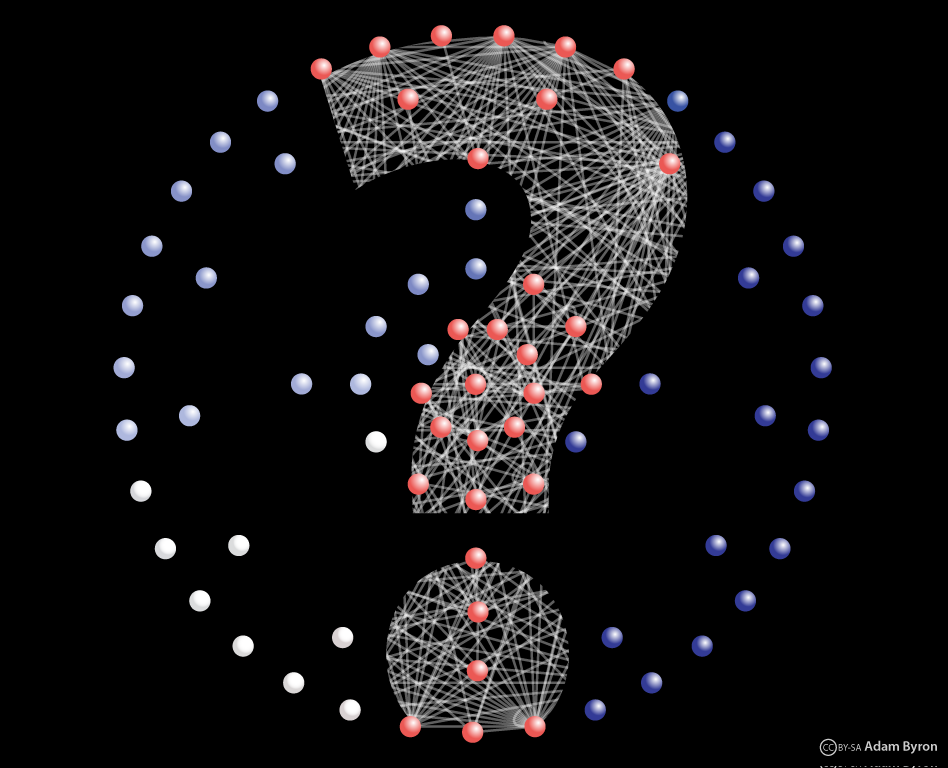
Interpreting proteomic data // Image by Adam Byron

Proteomic analyses, which often aim to catalogue – to ever-increasing depths – all the proteins present in a particular biological sample, generate vast sets of data. Of course, these datasets are only useful if they are interrogated to extract meaningful information, which is not a trivial task. Proteomic data are usually interpreted on the basis of current knowledge, which is important to gain understanding in the context of the experiment. Still, proteomic approaches such as mass spectrometry lend themselves to the discovery of new insights into proteins.

My letter in today’s issue of the Journal of Proteomics argues that the interpretation of proteomic data should be open to the possibility of identifying unexpected functions or subcellular locations of proteins.

Such approaches to the analysis of the ever-increasing volume of large-scale datasets will likely lead to many new discoveries.

Read the rest of this entry »