Archives for category: Research

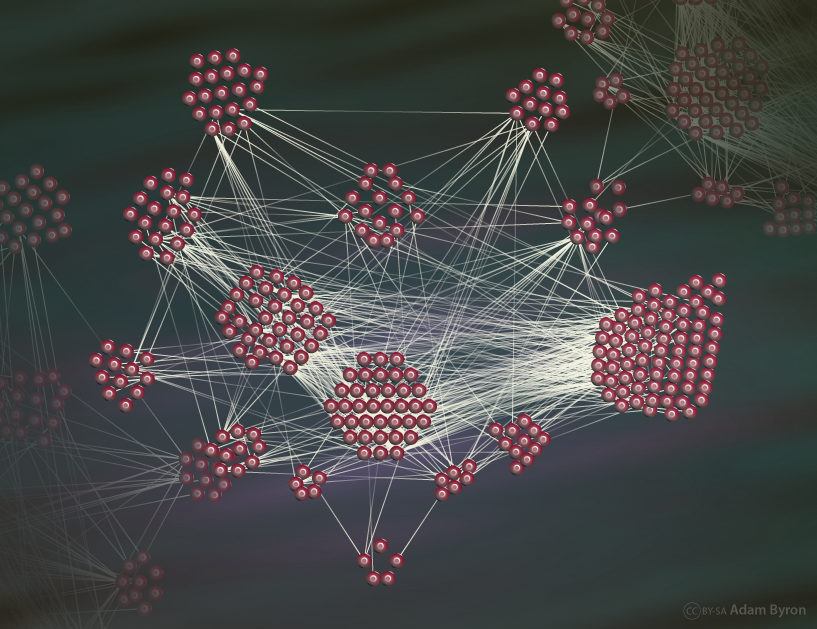
Research at the University of Manchester has identified networks of proteins that control the fate of our body’s stem cells, findings that could aid progress towards new disease therapies.

Extracellular matrix networks control stem cell fate // Image by Adam Byron

Extracellular matrix networks control stem cell fate

Stem cells have the amazing ability to develop into different types of cells of the body, such as blood cells, muscle cells or brain cells. Remarkably, stem cells can also regenerate, essentially renewing themselves an unlimited number of times.

Read the rest of this entry »

The liver plays key roles in fighting infection, extracting energy from food, ridding the body of waste and other important functions. Although a healthy liver successfully performs these numerous jobs every day, it can be harmed when exposed to additional, repeated insults, such as alcohol misuse. Long-term, continuous damage to the liver leads to scarring of the tissue (fibrosis) and ultimately liver failure. In fact, liver disease is the fifth most common cause of death in the UK.

Fibrotic extracellular matrix // Image by Adam Byron

Fibrotic extracellular matrix

Read the rest of this entry »

My paper has been published in the current issue of the journal Proteomics. The paper also makes the cover of the issue, which is a special issue on the theme of Cancer Proteomics.

Proteomics cover, 2012, vol. 12 (no. 13) // Images by Adam Byron & Sue Craig // Reproduced with permission from Wiley-VCH Verlag GmbH & Co. KGaA

Proteomics cover, 2012, vol. 12 (no. 13)

Read the rest of this entry »

I attended the recent “Signaling by Adhesion Receptors” Gordon Research Conference (24-29 June) and associated Seminar (23-24 June) in Waterville, Maine, USA. The topics of both meetings covered research on signal transduction involving cell-cell and cell-extracellular matrix interactions. These interactions are essential for a multicellular existence. Unsurprisingly, when these processes go wrong, disease is often a consequence, and the implications of adhesion signalling in cancer were frequently discussed during the meetings.

The Seminar, held in conjunction with the Gordon Research Conference, was aimed at students and post-docs. Held before the main Conference, the Seminar provided a unique opportunity to share data and ideas with peers. It was a great warm-up for the subsequent Conference! Both meetings benefited from highly interactive poster sessions, with people often ignoring the (imaginary) dinner gong to continue their discussions. Speaking of dinner, the final evening saw the conference dinner, as the stormy skies of the week cleared for a traditional al fresco Maine lobster bake. Not my cup of tea, but most people seemed to enjoy tucking into their crustaceans in the sunshine. Bibs were provided!

Maine Lobster // Image by Adam Byron

Maine Lobster

Read the rest of this entry »

I have recently returned from the Keystone Symposia meeting “Proteomics, Interactomes” that took place in Stockholm, Sweden (7th-12th May). It was the first Keystone Symposia meeting in Stockholm, which, although lacking the ski slopes so often sampled at Keystone meetings, made for a very pleasant venue. It was also the inaugural “Proteomics, Interactomes” conference, and hopefully it will be the first of many. The meeting was a great success, with an excellent range of speakers. The organisers, Matthias Mann, Ruedi Aebersold and Mathias Uhlén, put together an engaging programme that thematically (and chronologically) covered the “life” of the proteome, from birth (protein synthesis and interplay with genomics) through the prime of life (myriad interactions and signalling) to ultimate death (protein degradation). The end of the programme even ushered in the afterlife of the proteome!

View of Östermalm from Djurgårdsbron // Image by Adam Byron

View of Östermalm from Djurgårdsbron

Read the rest of this entry »

Follow

Get every new post delivered to your Inbox.

Join 196 other followers